


Ce este design-ul strategic
Pe lângă research și design solide, de ce rezultatul final tot se simte ca o versiune mai timidă, mai sigură a ceea ce toată lumea a fost de acord la început? Iată ce se întâmplă, de fapt.
Design strategic: nivelul care îți lipsește
Majoritatea liderilor de produs cunosc bine povestea asta dureroasă. Munca de design e solidă, research-ul e gata, iar prototipul rezistă la review. Dar undeva, între fișierul de design și produsul lansat, ceva se pierde. Se negociază în jos, se rotunjește, se transformă într-o variantă neutră cu care toată lumea poate trăi, dar în care nimeni nu crede cu adevărat.
Asta e o problemă de nivel lipsă. Mai exact, nivelul care îți lipsește se numește design strategic. Și majoritatea organizațiilor nici nu știu că le lipsește, pentru că nimeni nu le-a spus vreodată că ar trebui să existe.
Ce n-a fost UX-ul construit niciodată să facă
Design-ul UX rezolvă un anumit tip de problemă: experiența unui produs definit, într-un scop definit, pentru un utilizator definit. Acel scop clar e chiar forța lui, și în interiorul lui, un UX bun face diferența dintre un produs care funcționează și unul abandonat.
Dar există o categorie de probleme care trăiește în afara fișierului din Figma. Trăiește în structura organizației, în priorități de business care se contrazic, și în distanța uriașă dintre ce crede leadership-ul că ar trebui să facă produsul și ce au nevoie, de fapt, utilizatorii.
Aceste probleme nu au un scop clar. Nu se rezolvă ajustând interfața.
Design-ul strategic e ce se întâmplă atunci când aplici metodele de design, research, sinteză, validare, iterație, asupra acestor probleme mai mari, mai complicate. Nu pe ecran. Pe sistemul care alimentează ecranul.
Golul pe care nimeni nu-l numește în brief
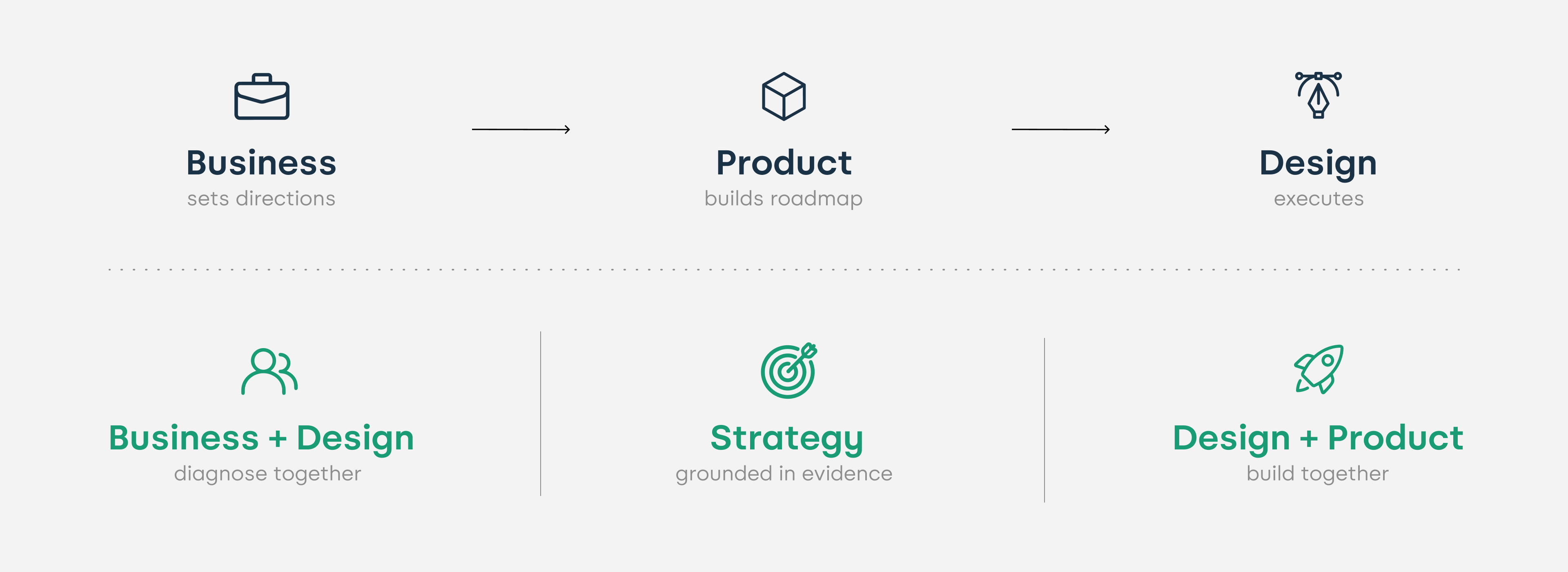
Iată ce se întâmplă, de obicei. Business-ul stabilește o direcție. Product-ul o traduce într-un roadmap. Design-ul execută pe baza lui. Presupunerea e că gândirea strategică s-a încheiat deja, înainte să ajungă pe biroul designerului.
Aproape niciodată nu e așa.
Ce ajunge, de fapt, la o echipă de design e, de obicei, un amestec confuz de insight real, presupuneri netestate și politici interne, fără nicio etichetă care să arate ce e ce. O echipă bună de UX lucrează cu ce primește. O practică de design strategic pune la îndoială brief-ul, înainte să atingă vreun instrument.
Diferența în rezultat e uriașă. O abordare produce o soluție bine proiectată, pentru o problemă care poate fi greșită. Cealaltă produce o soluție validată, ancorată în realitate, în nevoile utilizatorilor, în constrângerile de business și în limitele organizației, construită să reziste la contactul cu toate trei.
De ce moare design-ul bun în interiorul organizațiilor
Sună dur, dar design-ul bun eșuează, de obicei, chiar în momentul în care întâlnește organizația. Dezalinierea stakeholderilor, priorități care se schimbă, decizii luate în camere în care echipa de design n-a fost invitată. Astea sunt adevărații ucigași.
O singură sesiune de feedback necontrolată, cu oamenii nepotriviți în cameră, poate destrăma săptămâni întregi de muncă validată, în patruzeci de minute.
Design-ul strategic se ocupă direct de asta. Înseamnă să știi ce decizii aperi și pe care le lași să treacă. Înseamnă să construiești aliniere cu mult înainte să înceapă întâlnirea. Înseamnă să vii cu dovezi, nu cu convingere, pentru că, în fața politicilor interne, convingerea pierde, dovada de obicei nu.
De aici vine și valoarea specifică a facilitării externe, ceva ce echipele interne rareori pot reproduce. Niciun departament din interiorul organizației tale nu poate ține conversații cross-funcționale în mod neutru.
Oricine găzduiește camera, direcționează camera, chiar și fără să vrea.
Scopul real al unui designer
Un designer strategic nu e doar un designer UX mai senior. Scopul e cu adevărat diferit.
Design-ul UX lucrează la nivel de produs, în timp ce design-ul strategic lucrează la nivel organizațional. Așa cum a explicat designerul și urbanistul Dan Hill, design-ul strategic se situează cu câteva niveluri mai sus decât design-ul de interacțiune sau de servicii, în ceea ce privește sistemul pe care încearcă să-l schimbe.
Concret: un designer UX se asigură că un utilizator poate duce la capăt o sarcină. Un designer strategic pune sub semnul întrebării dacă acea sarcină ar trebui să existe, în forma ei actuală, și ce trebuie să se schimbe în organizație, ca orice redesign să reziste cu adevărat.
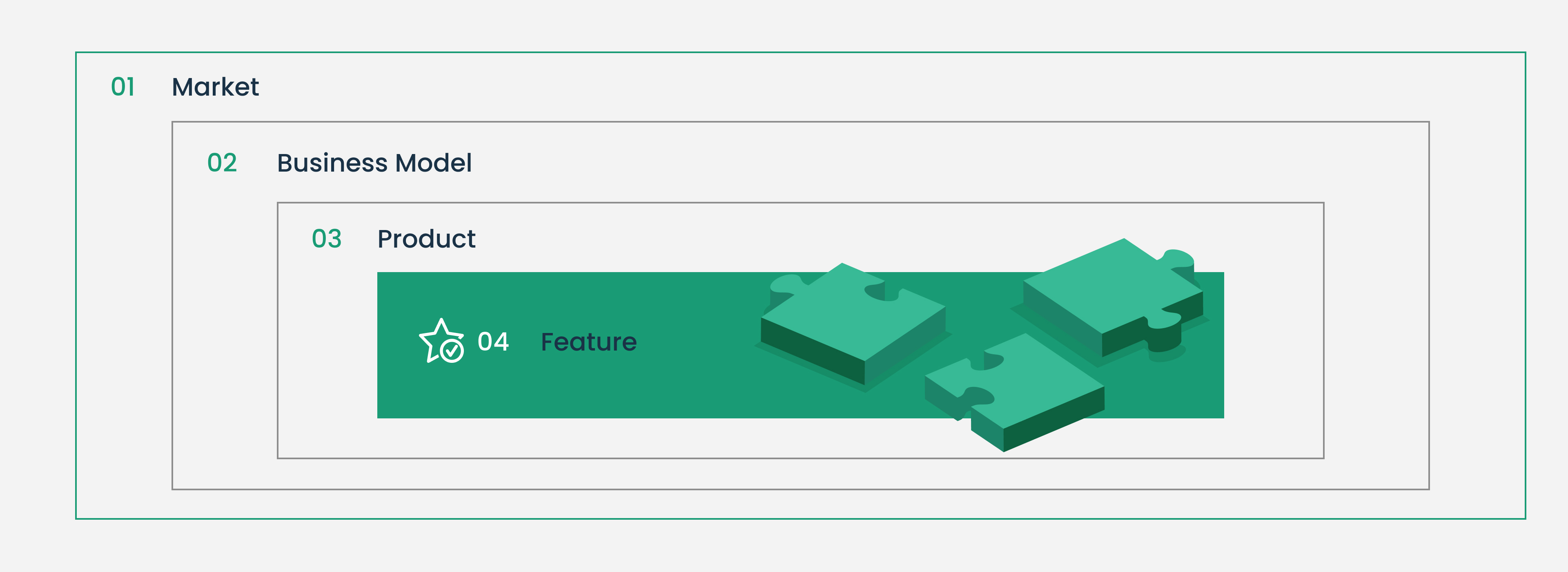
Design-ul strategic împrumută acest principiu din arhitectură și urbanism, disciplinele în care designerii au trebuit, primii, să se confrunte cu reglementări, politici publice și sisteme cărora munca lor trebuia să le supraviețuiască. Eliel Saarinen a spus-o simplu: proiectează mereu un lucru gândindu-te la contextul imediat următor, mai larg. Pentru liderii de produs, asta înseamnă: o funcționalitate în interiorul unui produs, un produs în interiorul unui model de business, un model de business în interiorul unei piețe.
Majoritatea eșecurilor unui produs digital sunt eșecuri ale acelui context mai larg, nu ale meșteșugului în sine. Segway a fost inginerit bine. Google Glass era, tehnic, înaintea vremii sale. Ambele au eșuat pentru că echipele care le-au construit n-au proiectat pentru condițiile în care produsul trebuia să supraviețuiască: cultura, comportamentul, realitatea de zi cu zi a utilizatorilor reali.
În practică, un designer strategic petrece la fel de mult timp lucrând cu echipa ta de conducere, pe cât petrece cu uneltele de design. Cercetează business-ul și piața ta, nu doar utilizatorii. Sintetizează acel research într-un diagnostic, o afirmație precisă despre ce anume blochează, de fapt, progresul, și apoi proiectează drumul prin acel blocaj, nu doar starea finală.
Fac și ceva ce majorității organizațiilor le lipsește cu disperare: traduc între limbajul design-ului și limbajul business-ului. Fac ca legătura dintre ele să aibă sens pentru toată lumea.
Trei întrebări cu care merită să stai de vorbă chiar acum
Design-ul strategic e o schimbare a momentului și a locului în care design-ul intră în procesul tău de decizie. Aceste trei întrebări sunt un diagnostic rapid pentru echipa ta:
- Când intervine design-ul în strategia produsului tău? Dacă răspunsul e „după ce roadmap-ul e deja stabilit", design-ul execută gândirea altcuiva. Asta e o problemă structurală. Până ajunge brief-ul la echipa de design, cele mai importante decizii au fost deja luate, adesea fără nicio dovadă în spate.
- Cine pune diagnosticul problemei, înainte ca cineva să înceapă construcția? Research-ul nu e diagnostic. A vorbi cu utilizatorii e necesar, dar nu suficient. Diagnosticul înseamnă să sintetizezi ce ai învățat, într-o afirmație clară și validată despre ce anume blochează, de fapt, progresul. Asta cere pe cineva care poate ține, în același timp, perspectiva utilizatorului și pe cea a business-ului, fără să o piardă pe niciuna.
- Cum supraviețuiesc deciziile contactului cu organizația ta? Orice lider de produs a văzut o decizie bună erodându-se, între ședința în care a fost luată și momentul în care a fost pusă în practică. Întrebarea nu e dacă se întâmplă asta. Se întâmplă, peste tot. Întrebarea e dacă ai un proces care face ca deciziile bune să fie mai greu de anulat pe tăcute.
Design-ul strategic cere ceva direct de la liderii de produs și fondatori: tratează design-ul ca partener strategic, nu ca funcție de producție la capătul liniei de asamblare.
Echipele de produs care au înțeles asta nu vorbesc despre design ca despre un serviciu pe care-l cumperi când știi deja ce construiești. Îl aduc înainte să decidă ce anume construiesc. Rezultatul e un proces mai ieftin, mai rapid, și care produce, în cele din urmă, o decizie de produs pe care o poți apăra cu dovezi.