

Founder & Head of Design
GoTech World 2026: Two Days of AI, Workflows and Real Conversations
A recap of GoTech World 2026: key insights from our booth, stage presentations, and Andrei Mihai's presentation on AI integration in workflows.
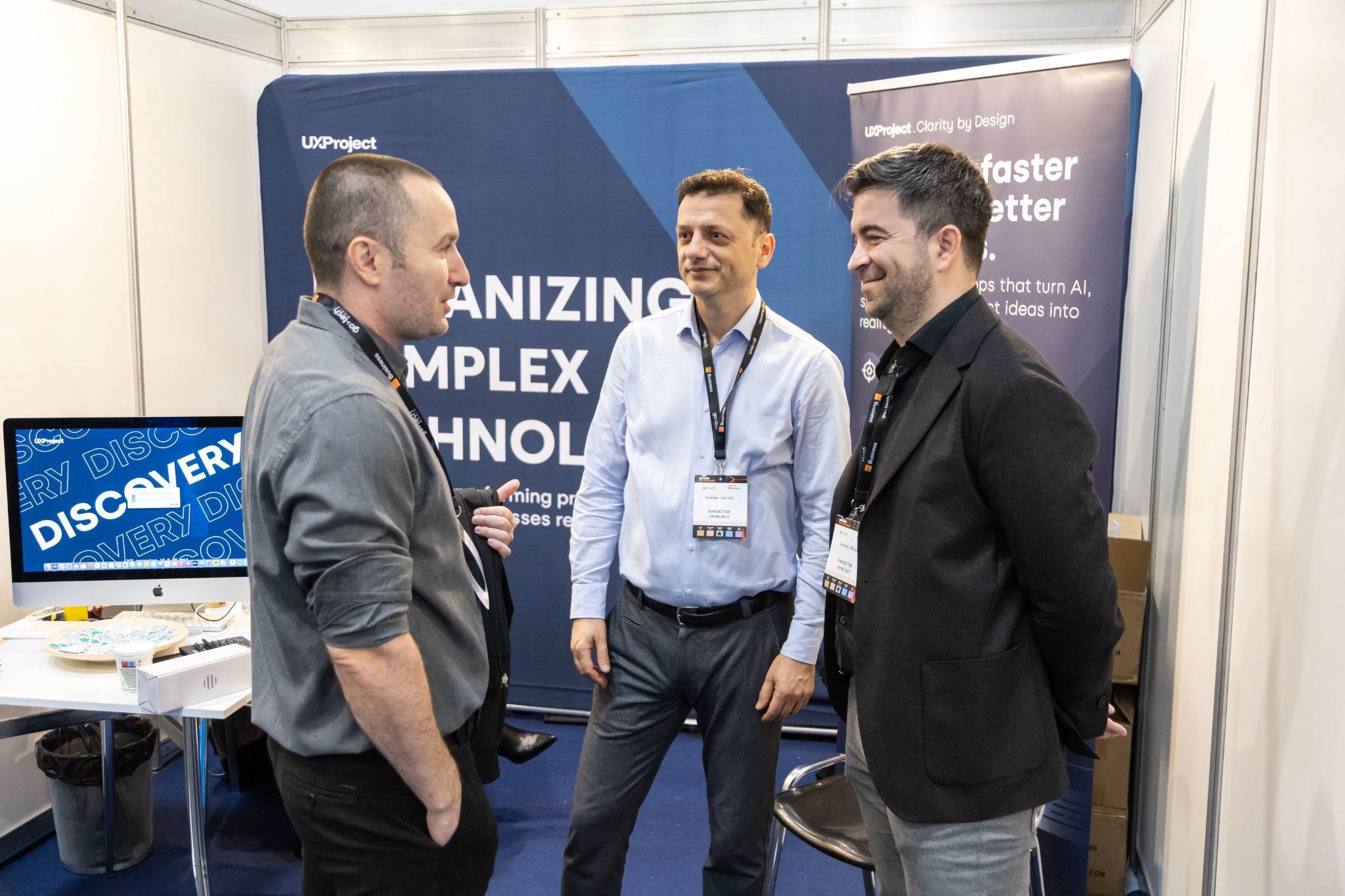
UXProject joined GoTech World in Bucharest on November 10-11, meeting innovators and decision-makers from across the tech and digital transformation space.
We brought our booth with a straightforward goal: to talk directly with the people navigating complex digital products and sluggish internal workflows every day.
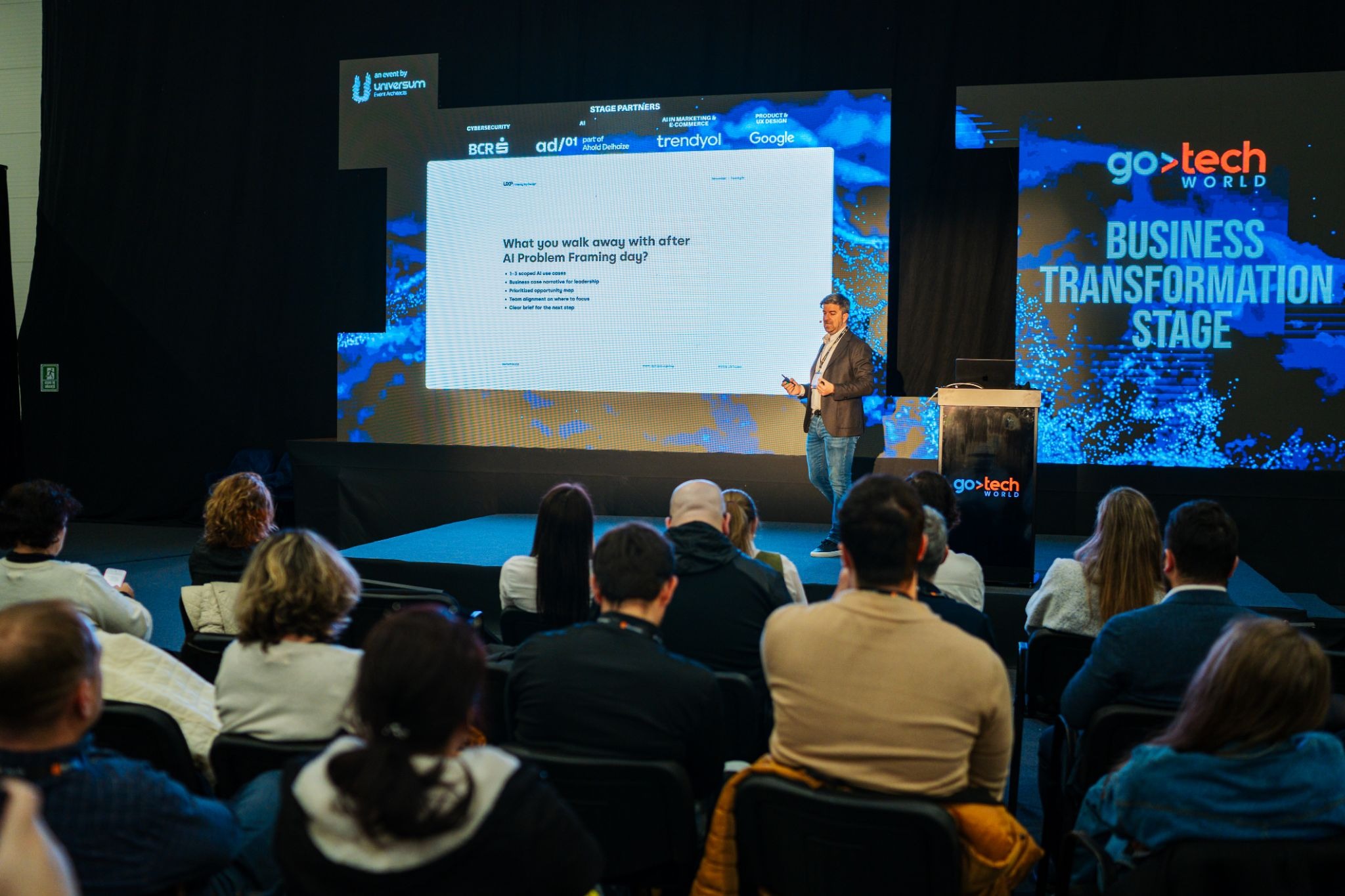
Our founder, Andrei Mihai, addressed this very challenge on the Business Transformation Stage with his talk on Redesigning Workflows, sharing practical ways teams can rethink how they work in the age of AI.
Highlights from Our Booth
The core of an event like this lies in the moments between talks, at the booths, over coffee, and during brief breaks. Throughout the two days, our stand served as a hub for connecting with founders, product managers, IT leaders, and operations specialists. A single question resonated across almost every conversation: "Where does AI actually fit in what we do?"
Attendees generally fell into two groups:
- those facing specific pain points, such as low adoption of internal tools, drop-offs in customer journeys, or spreadsheet-heavy processes
- and those tasked with implementing AI without a clear roadmap.
Rather than delivering a hard pitch, we prioritized listening. Time and again, the solution hinged on understanding user needs and workflows rather than focusing solely on tech capabilities.
Keynote: Workflow Redesign as a Human-Centric Skill in the AI Era
On the first day, Andrei Mihai, founder and Head of Design at UXProject, took the Business Transformation Stage. He made it clear from the start what the talk would be about:
"This isn't a technical discussion about technology, and it's certainly not about whether AI will save us or destroy us. It's a pragmatic talk about how we can use this technology in a way that brings real value to customers, employees and business owners."
Twenty Years, the Same Questions
Andrei started with 2006, the year Twitter launched, Google bought YouTube and he landed his first job in digital, building Flash websites for restaurants and hotels in Catalonia. When Flash disappeared, he moved into User Experience Design. In 2016 he founded UXProject, "with the mission of building a bridge between business and IT, always through the lens of the user."
"A client won't pay me for meetings. They want results, solutions, speed. In the same week, I'd go from energy to retail, from automotive to insurance. That's how I became a bit obsessed with working frameworks."
Why Most AI Projects Fail
"After years of looking at AI systems with some skepticism, I have to admit that in 2026 the pace of change surprised even me. I'd swing from panic to enthusiasm within the same hour, several times a day."
The requests coming into UXProject fell into two familiar categories: "We want to do something with AI, but don't know where to start" and "We know the problem, but not how to put the solution into practice."
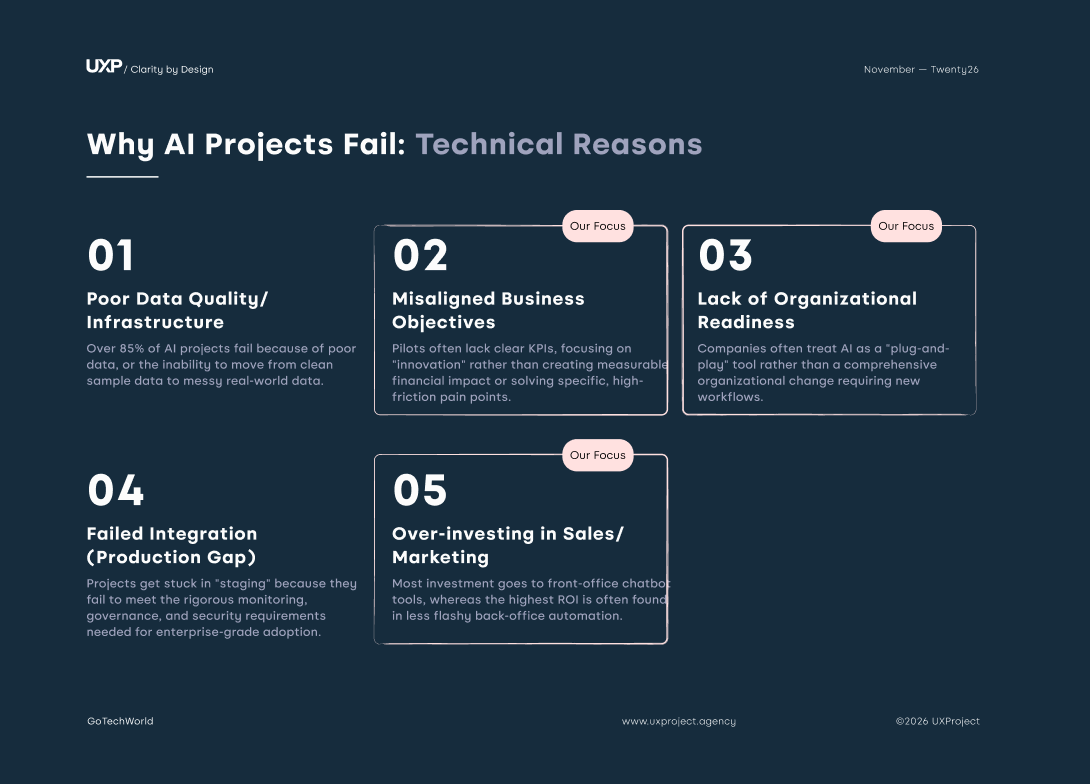
According to recent reports, between 88% and 95% of AI pilot projects never reach production. The main reasons are poor data, a lack of alignment with business goals, organizations that aren't ready to change, security constraints, and overinvestment in marketing tools instead of internal workflows, where ROI is often higher.
The AI Discovery Pod
UXProject's answer combines Design Sprints with Service Design:
"All these frameworks propose the same thing: how you can develop a project you can test in four to five days at most. It all starts with a multidisciplinary team working side by side in purpose-built workshops. We call this way of working the AI Discovery Pod."
Day one, Prioritization, moves from a wall of sticky notes to clear priorities in five steps:
- Put every AI idea on the table.
- Link each idea to business goals. "AI initiatives don't fail because of weak tech. They fail because they don't tie back to what the business cares about."
- Pick the right user segment.
- Map the Customer Journey and Service Blueprint, then assess ideas through four lenses: growth, money, data and pragmatism.
- Define one or more clear AI Use Cases.
Andrei closed with a thought:
"From 2006 until now, there have been 20 years of technology in which things have changed, yet at the same time stayed the same. The same problems and the same questions. Don't forget: all we get is time and choices. Be wise with both."
Key Takeaways from Other Stages
With 12 stages running in parallel, we had to choose carefully. A few sessions stood out because they touched the same tension we see in our projects every day: AI is moving fast, but people, processes and context decide whether it delivers.
- "The Future Is Not Something You Predict. It Is Something You Make": Igor Mikhalev (EY) opened the Main Stage with a strong reminder that the future is something organizations build, not something they wait for.
- "The $18 Trillion AI Opportunity: What's Blocking ROI?": the Genpact team asked one of the most important questions of the event, on the same Business Transformation Stage where Andrei spoke. The question echoed his own point about why so many AI pilots never reach production.
- "Context Is the New Infrastructure: Why AI Fails Without an Operating System": Stefan Chiriacescu (Ecommerce Today) made the case that AI without the right context and structure around it won't deliver.
- "AI and Learning: Designing the Human Side of Transformation": Pauline Rebourgeon (Ericsson) focused on the part of transformation most often overlooked, which is the people who have to adopt it.
- "Teaching Humanoid Robots Through Human Touch": Gijs den Butter (SenseGlove) brought one of the most talked-about moments of the event, a demo of haptic gloves that let you feel what a robotic arm is touching.
The common thread of GoTech World was hard to miss. Across stages and industries, the technology was rarely the bottleneck. Alignment, data, context and people were.
We left with new contacts, new questions and a clear confirmation that teams don’t need more AI tools. They need better ways to decide where AI belongs. What’s missing now is a clear framework to choose which problems are worth solving first and how each one connects to what the business actually cares about. Without that, even good technology ends up as just another pilot that never reaches production. And that is the conversation we want to keep having.
Thank you, GoTech World, for an anniversary edition full of energy!
Ready to Turn AI Ideas Into Real Results?
Maybe your team has a list of AI ideas but no clear priority. Maybe you know exactly which problem you want to solve but not how to get there. Either way, we can help you move from talking about it to testing it.
Through AI Problem Framing, we help you identify which AI initiatives are tied to your business goals and worth pursuing. Through the AI Workflow Sprint, we bring together a multidisciplinary team to turn the right idea into a tested, validated use case in just a few days.
Let's talk about your next AI project. Get in touch with us