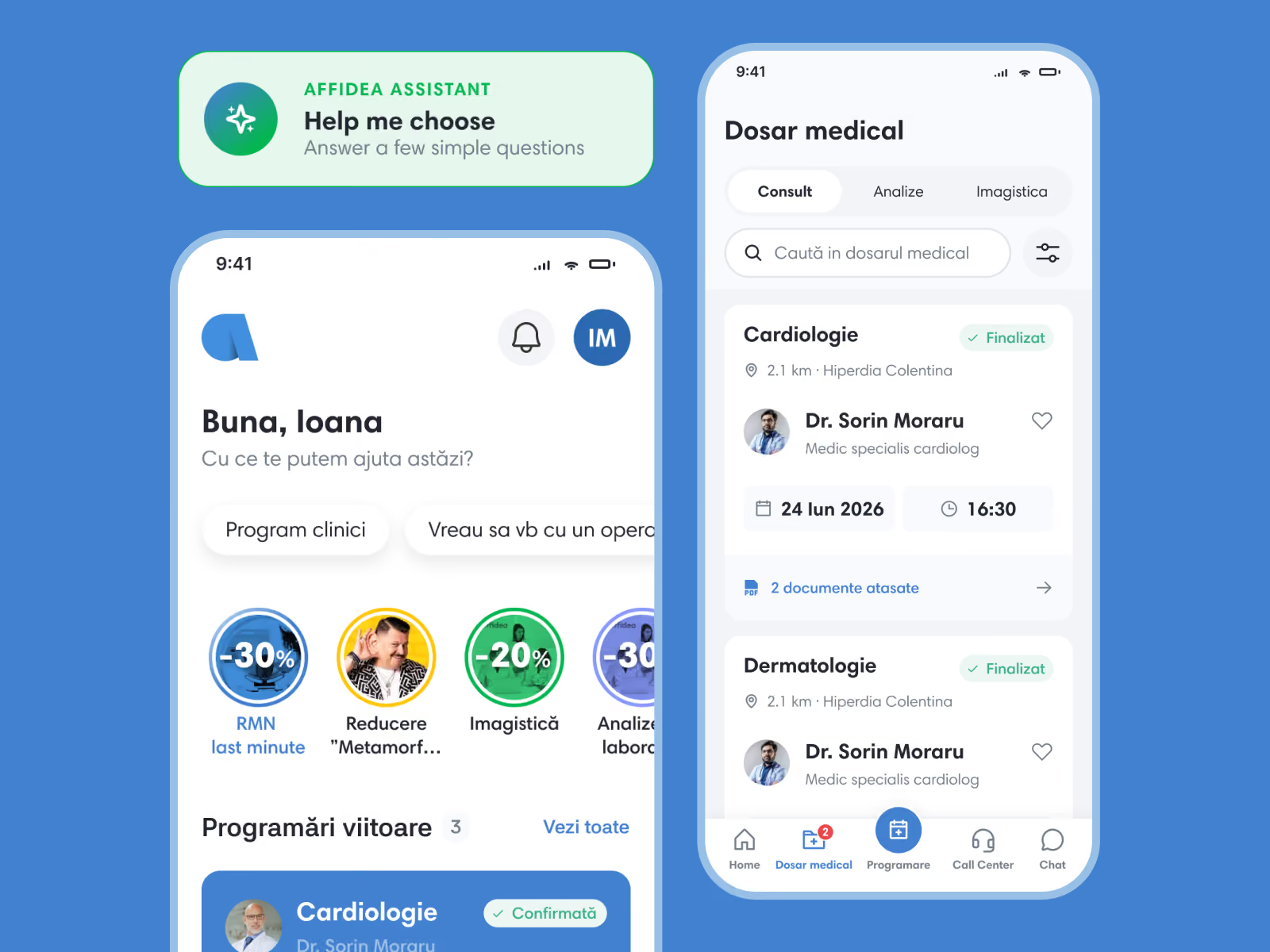
A design system is a shared library of reusable components, design tokens, and documented guidelines that keeps a product's visual language and interaction patterns consistent across every screen, feature, and team working on it. Think of it as the connective layer between UX design and UI design. It holds the buttons, typography, spacing rules, color tokens, and interaction states that designers and developers pull from instead of rebuilding from scratch every time. Companies moving from UX UI design done ad hoc, project by project, to a proper design system usually describe it as the point where design finally stops being reinvented every sprint.
The key difference between a design system and a mere style guide lies in the fact that the former is much more than that. While a style guide provides the details of how a button needs to be designed, the design system gives you a working button, right out of the box, with all the tests performed and accessibility checked. And that makes a world of difference since the role of the designer changes from recommending to implementing something immediately usable by developers.
A business case for a design system in the present instance, primarily involves speed and consistency at scale. With more than a handful of designers, who specialize in the fields of UX Interface design and front-end development as well as marketing in many cases, in a product's life cycle, a design system is the answer to prevent the costly drift from taking place, whereby each new feature looks slightly different since it is the interpretation of five people on "clean and modern". This is costly to fix since it normally requires an audit and reconstruction of inconsistent screens in an entire product.
There is also the impact of productivity that comes with having a design system. Since the parts have been designed, creating new features becomes faster. The process of on-boarding new designers and developers becomes faster since there is a single source of truth and not tribal knowledge hidden in old files. Finally, usability remains consistent since the interaction patterns, which the users have learned before on one screen, become the same on all other screens in the product without anybody consciously realizing that it is easier to use the product.
In the case of the enterprise companies such as banks, retail companies, and telecommunication, a design system is not just a nice-to-have feature but almost an infrastructure component.